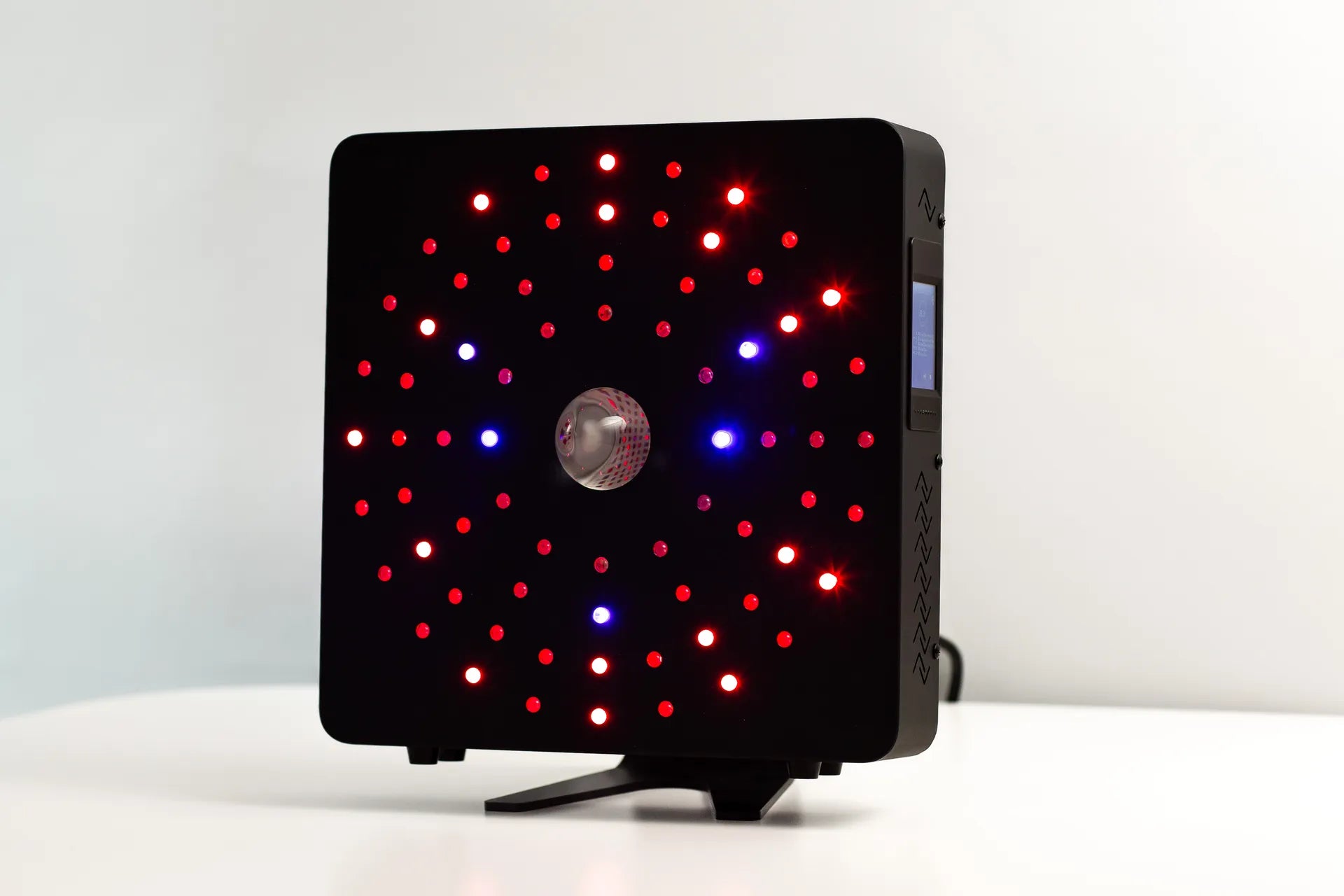
Why The Spectrum Beats The Single Diode
Biology rarely responds to a single input. Why a coordinated spectrum of wavelengths outperforms one bright, isolated diode.
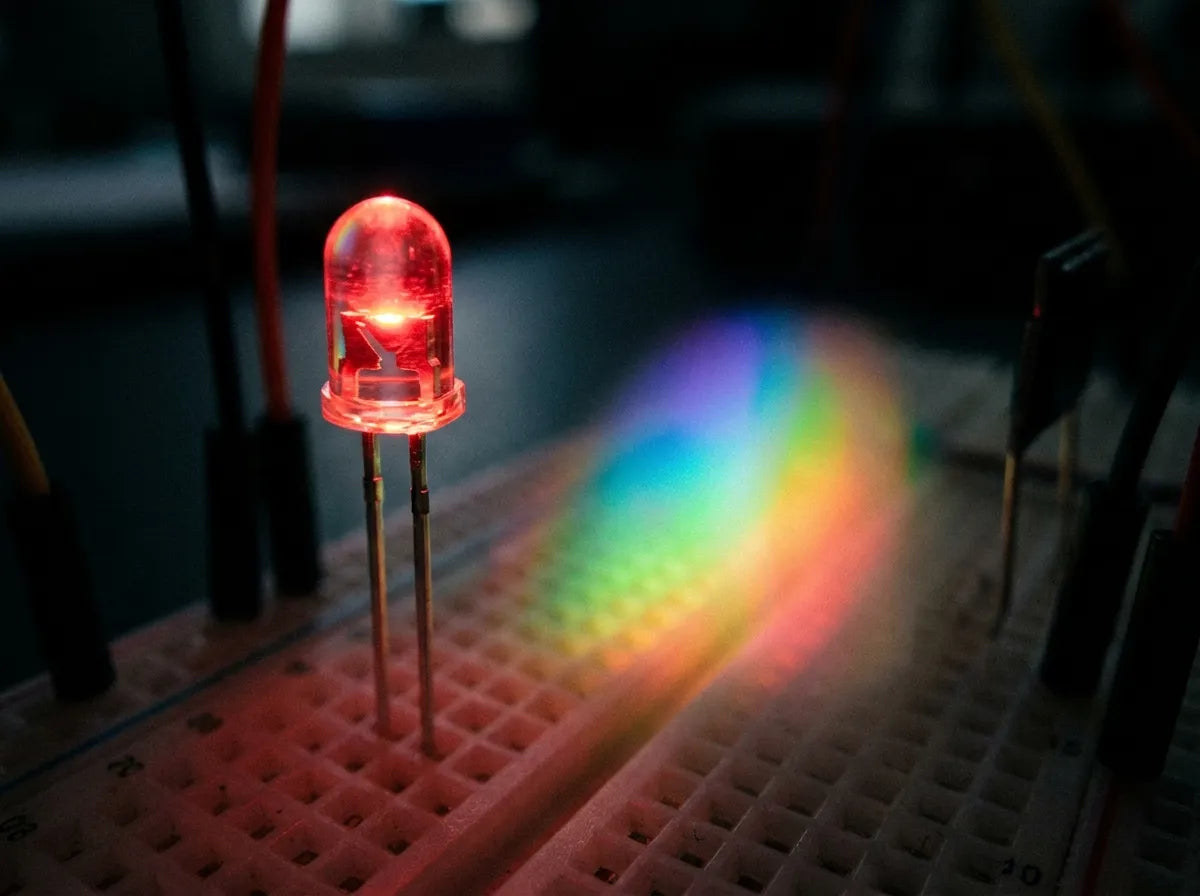
Almost every red-light device is sold on a single number. One wavelength. One big figure for power. It looks like clarity. It is actually the opposite of how biology uses light.
Nature never delivered light as a single line. Sunlight arrives as a broad, layered spectrum — ultraviolet, the full visible range, and a deep tail of near-infrared — all at once, shifting through the day. Our biology didn't evolve to answer one frequency. It evolved to read a chord.
DepthDifferent Wavelengths, Different Jobs
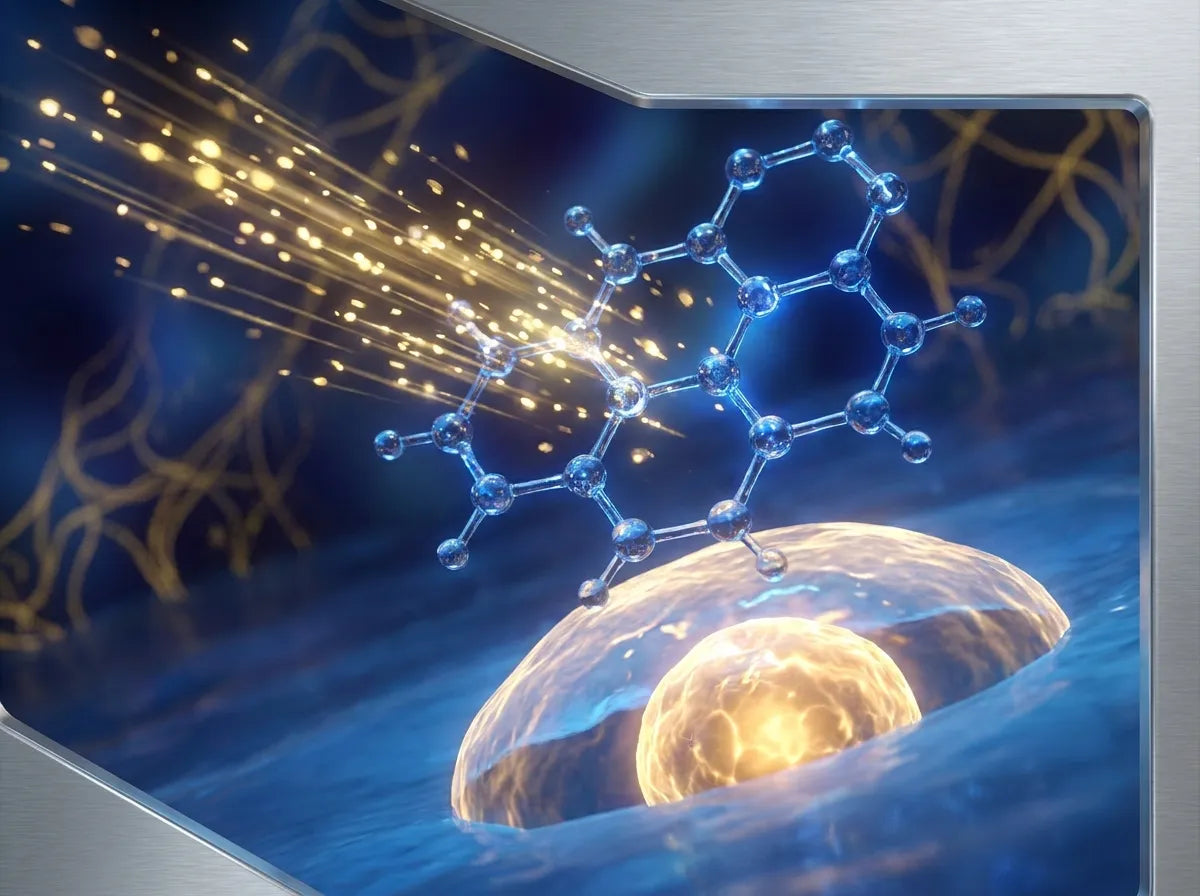
Wavelength decides where light goes and what it touches. Red around 660nm is absorbed at the skin, supporting tone and collagen. Near-infrared around 810nm travels deeper into muscle and nervous tissue. Ultraviolet sets biological context — time of day, season, vitamin D. A single diode can only ever speak to one of these layers.
Sunlight is an orchestra. A single diode is one note, played louder.

CoordinationWhy The Chord Beats The Note
Biology rarely responds to a single input. It integrates signals — wavelength, dose, timing, environment and state — and acts on the combination. Give it one wavelength and you get one narrow response. Give it a coordinated spectrum and the signals reinforce each other: surface and depth, information and energy, day and night.
Intensity alone doesn't fix this. Photobiomodulation follows a biphasic curve, where a sensible dose helps and an excessive one does not. A brighter single diode is still a single message shouted louder — not a richer one.
The most important question isn't “how many milliwatts?” It's “how completely does this speak biology's language?” A spectrum answers that. A single diode never can.
Educational, not medical advice. Reflects general principles from the photobiomodulation literature; individual responses vary.