Mitochondria, Water And The Photon
Light doesn't stop at the skin. It reaches the engines of the cell, restructures the water around them, and quietly changes how energy is made.
We tend to picture light therapy as something that happens on the surface — a warm red glow on the skin. But the part that matters most happens far below it, inside structures most of us last thought about in a biology class.
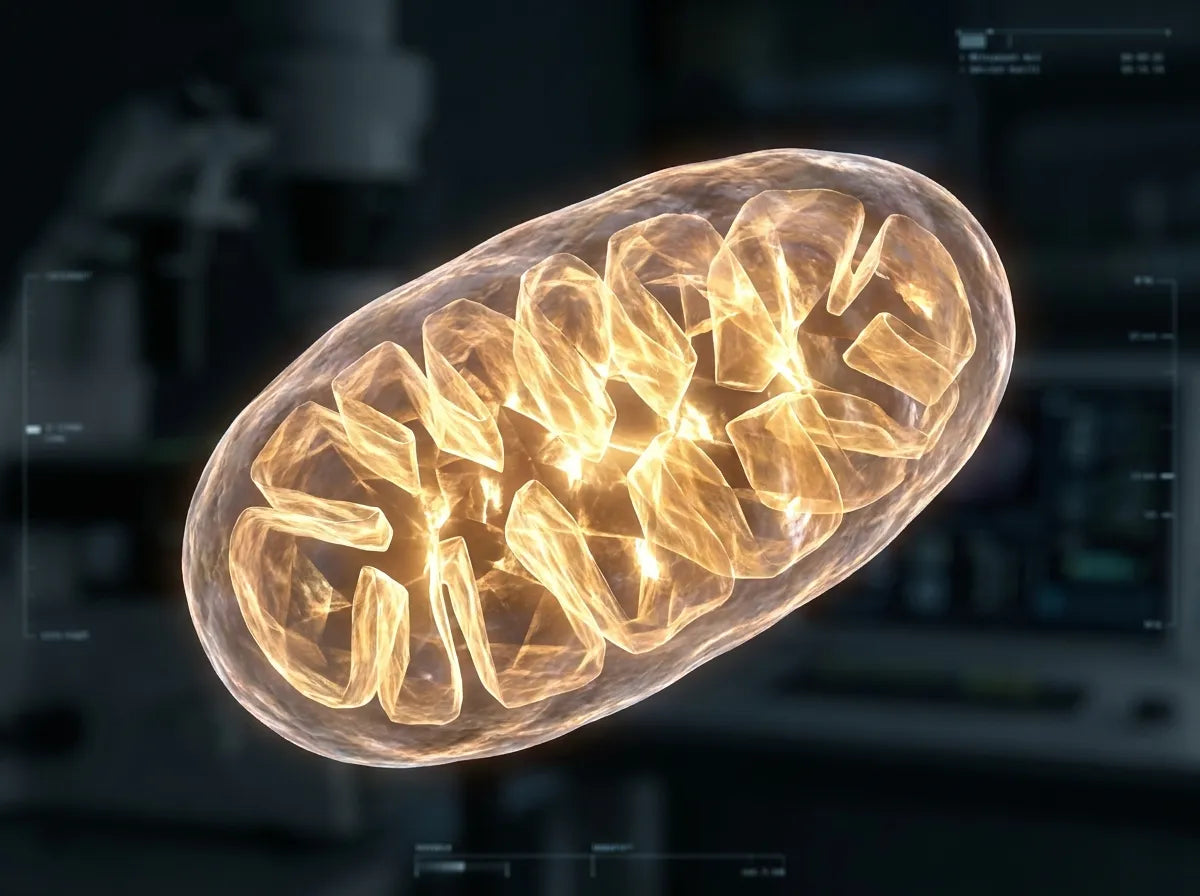
Every cell in your body runs on a currency called ATP. It is made, almost entirely, inside the mitochondria — tiny organelles that behave like power plants. A single hard-working cell can hold thousands of them. When they slow down, everything downstream slows with them: recovery, focus, repair, resilience.
The AntennaCytochrome c Oxidase
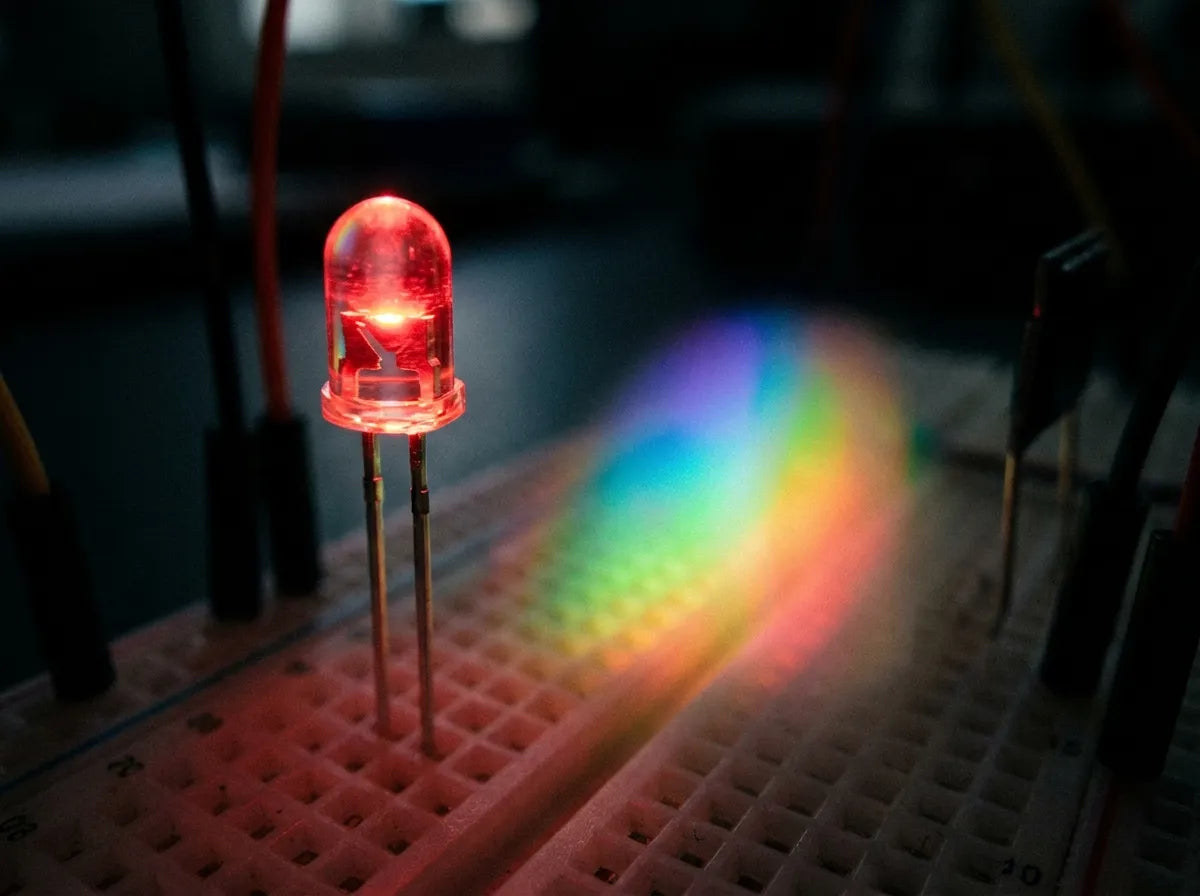
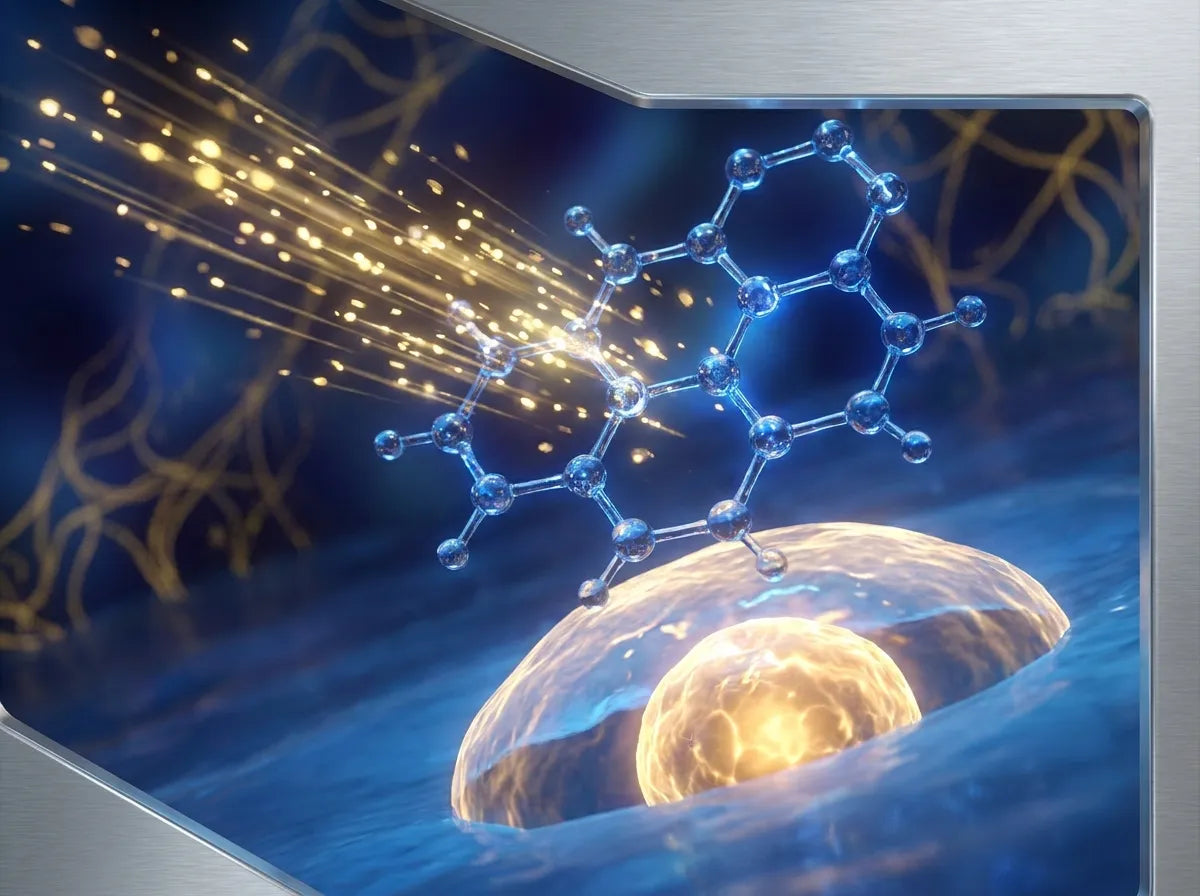
Near the end of the mitochondrial assembly line sits an enzyme called cytochrome c oxidase. It has an unusual property: it absorbs red and near-infrared light especially well. When a photon in that band reaches it, it nudges the electron-transport chain forward — and the cell makes a little more energy than it otherwise would.
A second effect happens at the same moment. The light briefly releases nitric oxide that had been parked on the enzyme. Nitric oxide relaxes blood vessels, so the tissue gets more oxygen and more fuel at exactly the time it can use them. None of this is heat. It is closer to a signal the cell already knows how to read.
A photon of red light is not warmth on the skin. It is information the mitochondria evolved to recognise.
The Hidden LayerThe Water Nobody Talks About
There is a newer, stranger part of the story. The water pressed against the surfaces inside a cell does not behave like the water in a glass. It organises into layered, charge-separated zones — sometimes called structured or interfacial water. Several researchers argue that light can change how this water is ordered, lowering its viscosity and making the molecular machinery turn more freely.
This is still an active area of study, not settled fact. But it points at something important: the cell is not a bag of chemicals. It is an environment, and light helps set the conditions of that environment.
The RulesWhy Depth And Dose Decide Everything
Two things govern whether any of this helps. The first is depth: shorter red wavelengths act near the surface, while near-infrared reaches deeper tissue, muscle and — at the right wavelengths — even the brain. The second is dose. Photobiomodulation follows a biphasic curve: a moderate amount helps, while too little does nothing and too much can blunt the effect. More light is not better light.
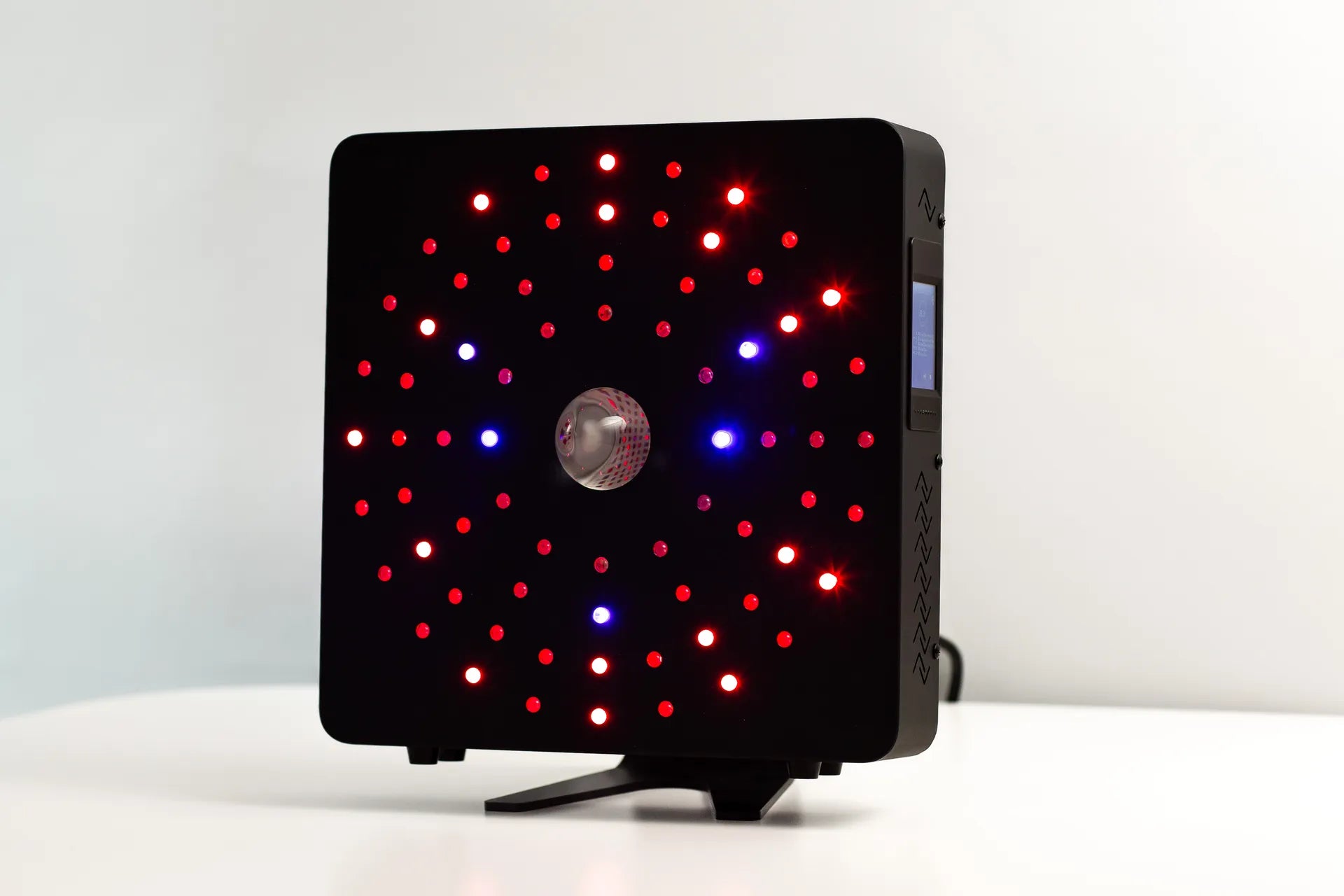
This is exactly why a full-spectrum, dose-aware device matters more than a single bright diode. Biology is asking for the right message at the right depth at the right time — not the loudest possible one.
The future of light therapy is not about delivering more light. It is about delivering better biological information — to the right place, in the right amount, at the right moment.
Educational, not medical advice. Mechanisms summarised here draw on the broader photobiomodulation literature (e.g. Karu; Hamblin) and remain an evolving field.