Red Light Before or After a Workout? The Timing Guide
Before training primes muscle and may delay fatigue; after supports recovery. Here is what the photobiomodulation research shows — and a simple protocol for both.
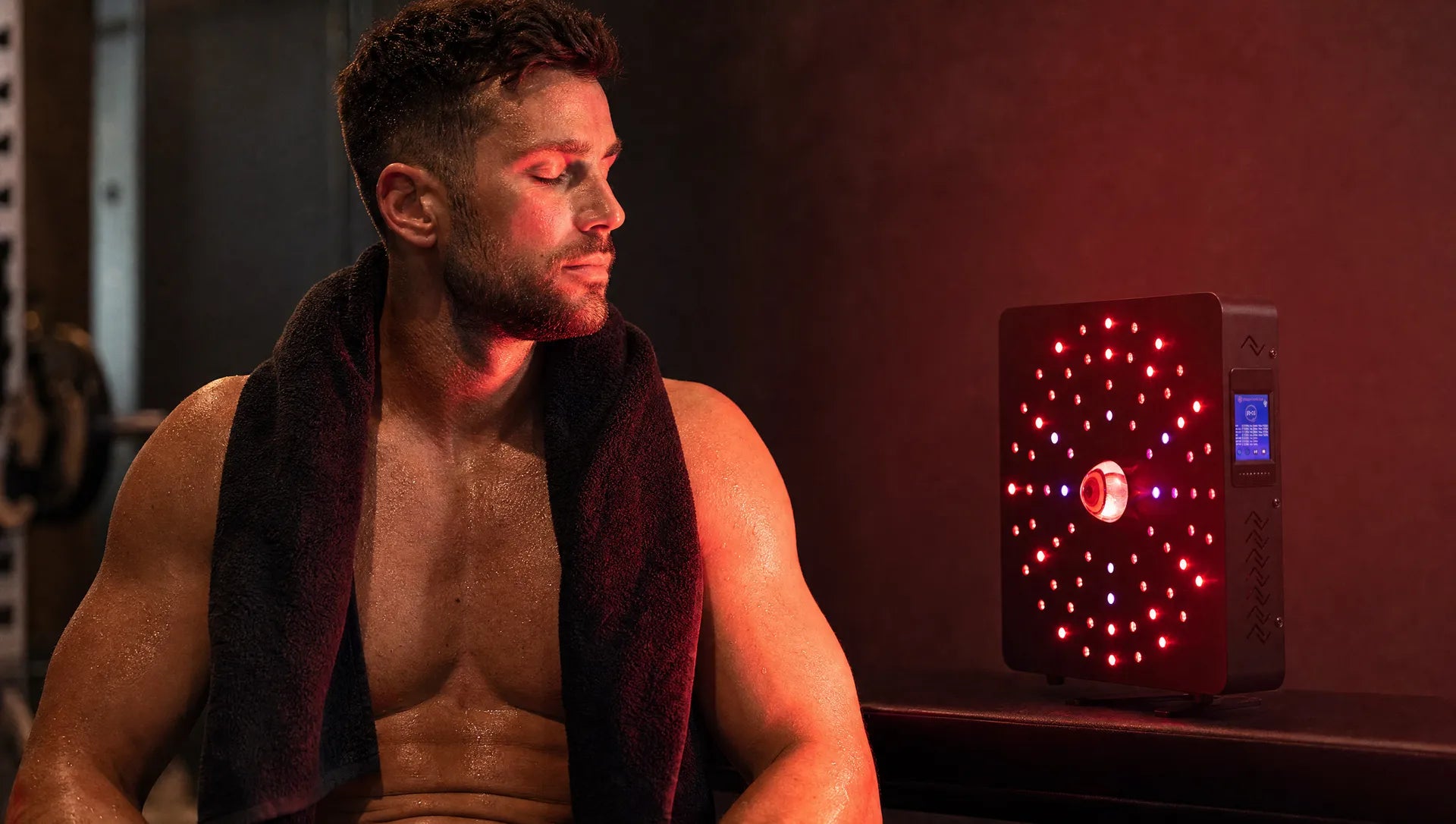
Both work, for different jobs. Using red and near-infrared light before training is studied for priming muscle — improving performance and delaying fatigue. Using it after supports recovery — easing soreness and aiding repair. If you can only pick one, choose by your goal: before for performance, after for recovery. Many people do both.
"Before or after?" sounds like a trick question with one right answer. It isn't. The two windows do two different jobs, and which one you want depends on what you're training for that day. Once you see what the research actually splits into, the timing decision becomes simple.
The foundational review of light on muscle describes two distinct effects: a performance-and-fatigue effect, most useful before exertion, and a repair-and-recovery effect, most useful after. So "before or after" is a choice about which effect you want — not a contest with a single winner.
01 · The QuestionDoes the timing actually matter?
Yes — because the two windows target different things. The foundational review of light on muscle found that red and near-infrared photobiomodulation improves muscle performance, delays fatigue, and aids repair after exercise and injury (Ferraresi, Hamblin & Parizotto, 2012). Those are two distinct effects — a performance/fatigue effect that is most useful applied before exertion, and a repair/recovery effect most useful after.
Both windows work. Before training is for performance and fatigue; after is for repair and recovery. Pick by your goal — and if you want both, keep each dose in range.
02 · BeforeBefore a workout: priming and delaying fatigue
Applied before training, the relevant finding is the performance-and-fatigue half of Ferraresi et al. (2012): light delivered to muscle ahead of exertion is associated with better performance and delayed onset of fatigue. The mechanism fits — red and near-infrared support mitochondrial ATP production via cytochrome c oxidase (Hamblin, 2018), essentially topping up the cellular energy system before you demand a lot from it. Practically, this means lighting the muscle groups you're about to train, shortly before you start.
03 · AfterAfter a workout: recovery and repair
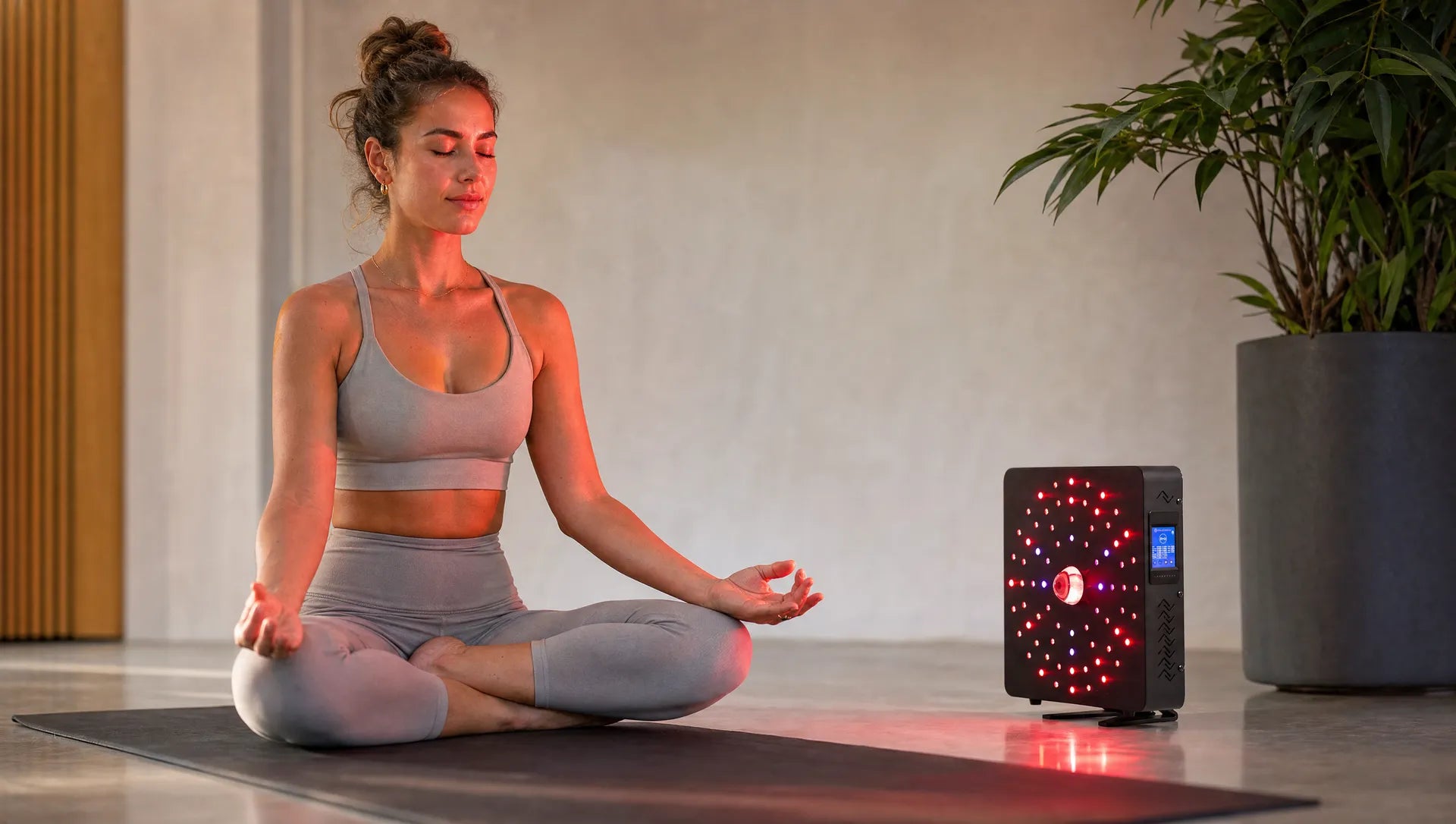
Applied after, the relevant half is recovery — easing soreness and supporting the repair of exercised or damaged muscle (Ferraresi et al., 2012). This is the more familiar use case, and the one most "red light for recovery" claims rest on. It pairs naturally with the deeper-reaching near-infrared bands (~770–810nm), which penetrate further into muscle tissue than red (Salehpour et al., 2019).
04 · Side By SideBefore vs after — at a glance
| Before training | After training | |
|---|---|---|
| Goal | Prime muscle, delay fatigue | Recover, ease soreness, support repair |
| Best for | Performance days, key sessions | Recovery days, post-hard-session |
| Evidence (Ferraresi 2012) | Performance & fatigue findings | Repair & recovery findings |
| When | Shortly before the session | Soon after the session |
| Wavelength lean | Red + NIR | NIR-led for depth |
The same device serves both windows — what changes is your goal and which bands lead.
05 · DoseCan I do both? And how much?
Yes — many people light the muscle before to prime and again after to recover, and the review supports both ends (Ferraresi et al., 2012). The non-negotiable caveat is dose: photobiomodulation is biphasic, so a bigger or longer session is not a better one — there's an optimal window, and overshooting it can blunt the effect (Huang et al., 2009). Don't treat "before and after" as licence to double up indefinitely; keep each dose in range. A sensible recovery session is roughly 8–15 minutes per area, but your real numbers depend on your device's irradiance at your distance — use the dose calculator and our ready-made protocols.
06 · The Bigger FrameRecovery is a 24-hour signal, not a 10-minute one
Here's the reframe. Pre- and post-workout light is real and worth timing well — but the largest lever on recovery isn't a panel at all, it's the rhythm of your day. Muscle repairs on the back of deep sleep, which depends on a well-set circadian clock: bright light by day, darkness at night (Czeisler et al., 1989). A red panel around your workout helps the muscle directly; getting your whole light environment right — bright mornings, dark evenings — is what lets the body do the repair the panel only nudges. That daily-rhythm, full-spectrum view is the brief behind REDelios ONE. Time the light around your workout — and time your light across the day.
This is wellness and educational information, not medical advice. Red light supports the conditions for performance and recovery; it is not a treatment and not a substitute for training, sleep or nutrition. If you have an injury or condition, check with a qualified professional before starting.
REDLIGHT.DOCTOR provides wellness and educational information, not medical advice, diagnosis or treatment. Wavelengths and device specifications are stated as engineered. Studies referenced describe research findings and are not claims that any device treats, cures or prevents disease. Consult a qualified professional for individual guidance.