The Architecture of a Biological Day
Your body runs on a light-built 24-hour rhythm: morning bright light wakes the clock, evening darkness releases melatonin. The circadian architecture of a day, cited.
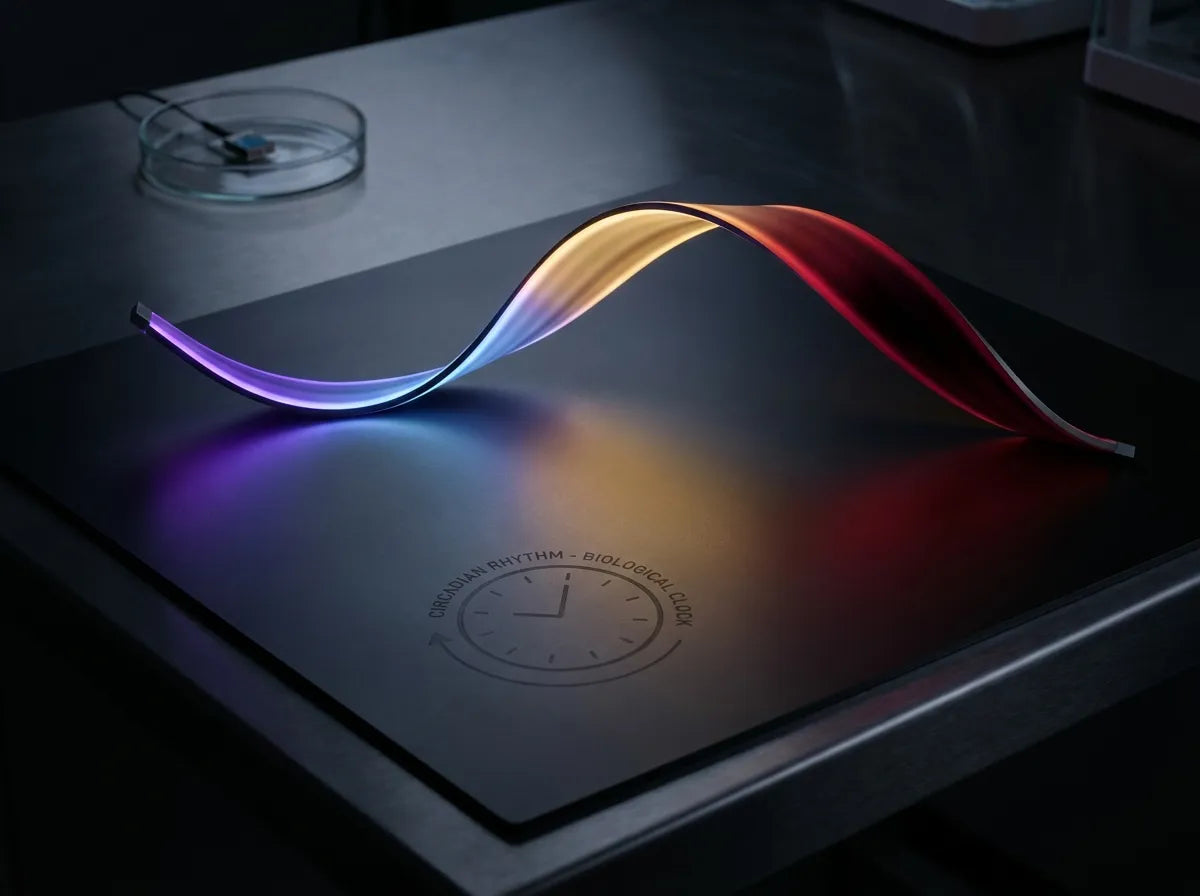
A biological day is built by light. Morning bright light sets your internal clock and aligns the natural cortisol rise that wakes you; across the day that light keeps the clock entrained; evening darkness — and warm, dim light — lets melatonin rise for sleep. Get the timing right and the rhythm — energy by day, sleep by night — follows.
Almost every cell you own keeps time. These clocks are coordinated by a master pacemaker in the brain — the suprachiasmatic nucleus — and the master input that sets them is light, specifically the timing of light across 24 hours.
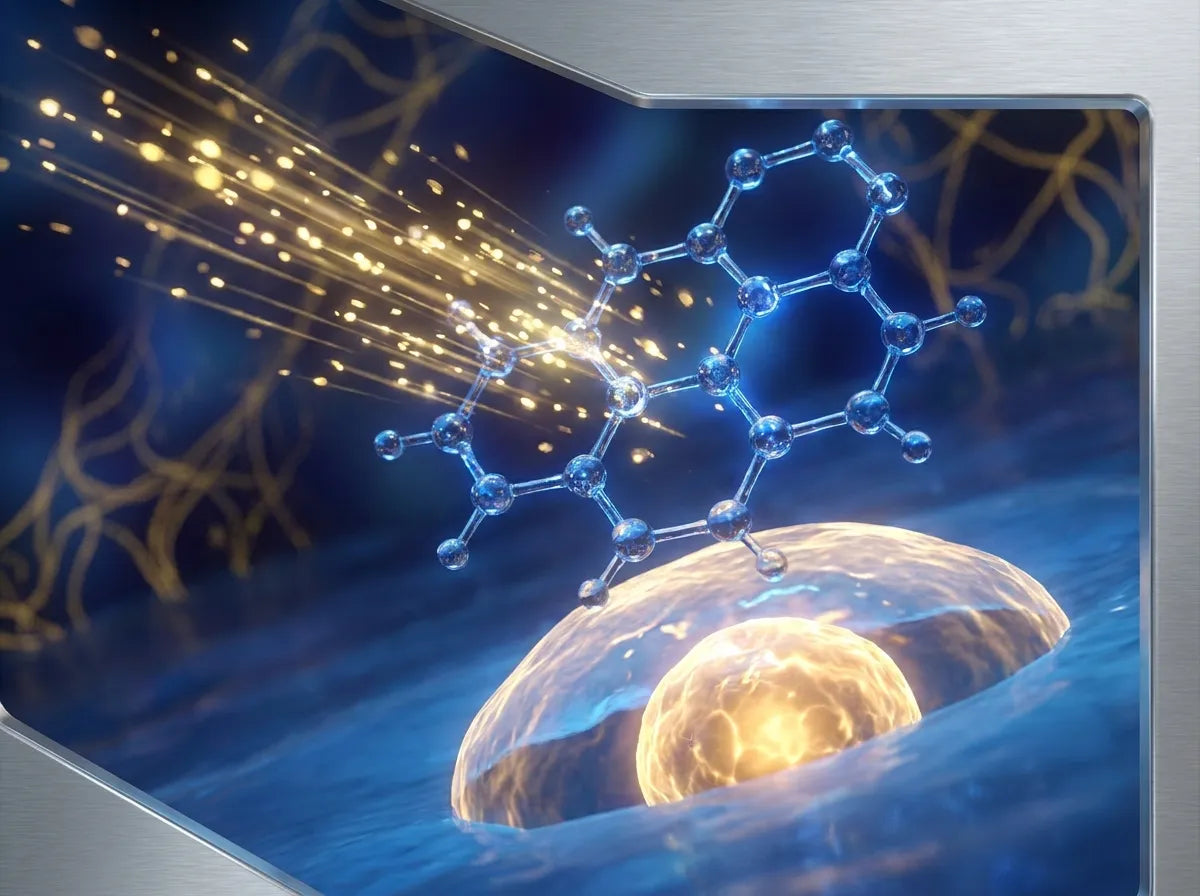
Timed bright light produces strong resetting of the human circadian clock (Czeisler et al., 1989), and the signal is read not by the rods and cones you see with, but by specialised intrinsically photosensitive retinal ganglion cells containing melanopsin, most sensitive to blue light around 480nm (Berson et al., 2002; Hattar et al., 2002). The architecture of a day is the shape of the light signal you give your body — and the modern indoor problem is that we have flattened it: dim by day, bright by night, the opposite of what we evolved under.
01 · The ClockWhat is a "biological day," and what builds it?
Your body does not keep a single clock. It keeps billions of them — one in nearly every cell — all coordinated by the suprachiasmatic nucleus, the master pacemaker in the brain. Left alone, that pacemaker runs slightly off 24 hours. Light is what corrects it each day, holding the whole system in step with the planet's turn.
That correction is set by the timing of light far more than its sheer quantity. A bright morning and a dark night tell the clock where it is in the day; a flat, dim, screen-lit indoor life tells it almost nothing — or worse, the wrong thing. The job, then, is to give the body a clear daily signal: bright when the sun is up, dark when it is down.
02 · The PhasesMorning, midday, evening — the shape of the signal
A biological day has a shape, and each part of it asks for a different kind of light. Read in order, the three phases are simply the rise, the hold and the release of the daily light signal.
Morning — bright light, and the cortisol rise. The day should open bright. Morning light hitting those melanopsin cells is the strongest anchor for the whole clock — it sets the phase from which alertness, hunger and the evening melatonin release are all timed (Czeisler et al., 1989). It also aligns with the body's natural morning cortisol rise, the healthy pulse that lifts you into wakefulness. Cortisol here is not the villain of stress headlines; it is the body's built-in "morning" signal, and bright early light helps it land at the right time.
Midday — holding the rhythm. Through the day, continued bright light keeps the clock entrained and supports daytime alertness and mood. This is where the modern indoor light environment quietly fails us: typical indoor lighting is a fraction of outdoor brightness, so the daytime "this is daytime" signal is weak. A strong daytime signal is half of what makes the night signal work — you cannot get a deep night without a bright day. Blue and bright light, so often cast only as the villain, is exactly what you want in this window.
Evening — darkness, warmth, and melatonin. As the day closes, the architecture inverts. Melatonin, the hormone that opens the gate to sleep, is suppressed by light, and that suppression peaks in the blue band around 460–464nm (Brainard et al., 2001; Thapan, Arendt & Skene, 2001). So the evening job is the opposite of the morning's: remove the blue, dim the light, go warm. This is what dusk used to do automatically and what screens and ceiling lights now abolish.
03 · The SurpriseWhy does morning light improve your night sleep?
This is the part that surprises people: the best thing you can do for sleep happens in the morning. Because bright early light sets the clock's phase, it determines when melatonin will be released that night — a well-anchored morning brings the evening melatonin rise forward to a sensible bedtime (Czeisler et al., 1989).
Morning light and evening darkness are not two separate tips. They are two ends of one rhythm — fix the morning, and the night often follows.
Practical moves on the night side: dim and warm your evening light, cut screens or block their blue and green in the last hours, and consider deep-red evening glasses that block both blue and green — protecting the dark half of the day so melatonin can rise on schedule.
04 · The ThesisYou don't need more light — you need the right light at the right time
Here is the whole argument. The wellness world obsesses over single wavelengths and single products. But human biology does not run on a wavelength — it runs on a rhythm of the day: the right spectrum delivered with the right timing, bright by day and dark by night. The modern indoor life breaks both halves at once — too dim when we need brightness, too bright and blue when we need dark.
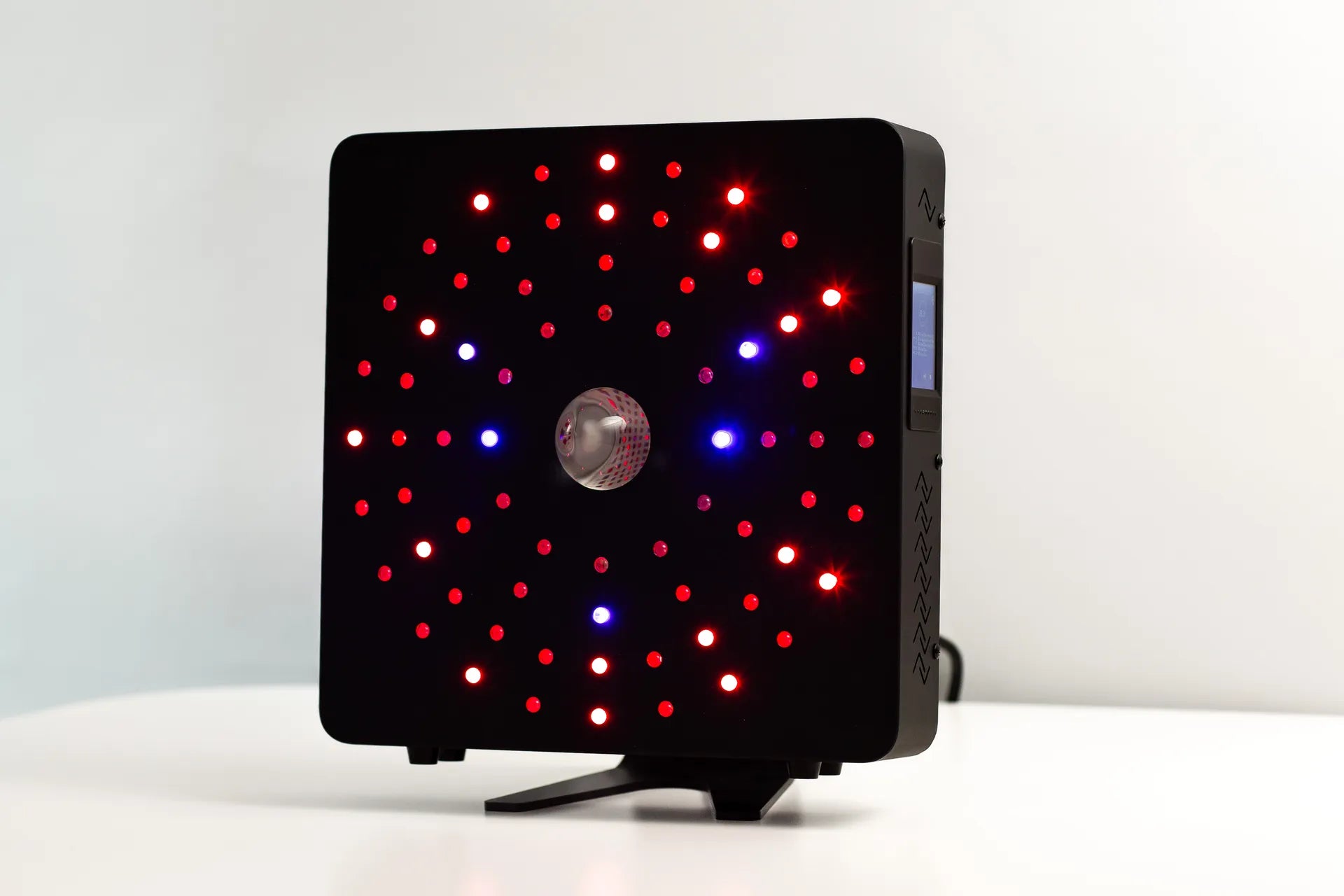
A red panel addresses neither; it has no concept of time of day. This is exactly the gap a full-spectrum, rhythm-aware device is built to close: REDelios ONE presents the breadth of sunlight (297–1280nm) in measured doses, designed to support the bright-day side of the architecture, while evening eyewear protects the dark-night side. Build the day; the rhythm builds you.
05 · At A GlanceThe architecture of a day, in one table
| Time | The light signal you want | What it drives |
|---|---|---|
| Morning | Bright, full-spectrum, early | Anchors the clock; aligns the cortisol wake-up rise |
| Midday | Bright, ample | Holds entrainment; daytime alertness & mood |
| Evening | Dim, warm, low blue | Lets melatonin rise; readies sleep |
| Night | Dark | Sustains melatonin; deep, restorative sleep |
The shape of the daily light signal — and what each phase drives.
This is educational information about circadian biology, not medical advice or a treatment for any sleep disorder. The aim is to support the natural rhythm of bright days and dark nights — not to replace medical care. If you have persistent sleep problems, speak with a qualified professional.
REDLIGHT.DOCTOR provides wellness and educational information, not medical advice, diagnosis or treatment. Wavelengths and device specifications are stated as engineered. Studies referenced describe research findings and are not claims that any device treats, cures or prevents disease. Consult a qualified professional for individual guidance.